This is the first day I can remember. It's not my first memory, by any means. Not by a long shot. There are other times, places, and faces that I can recall happening before this moment. The trick with all these other events is that they fall prey to the spotty, patchwork quilt quality of that brief yet crucial span of time when the human mind is still busy assembling itself into something like a fully fledged consciousness. Before the day I'm talking about, all I have to go on are all just snippets, or bits of fragmented pieces of things I saw. If I had to take a guess, then it might be that this is what the start of everyone's childhood is like. The funny thing about it in my case is that what I recall with anything like crystal clarity isn't the house I grew up in, or things of that nature. Instead, it's all scenes from various movies. The first fragment seems to have been more or less the entirety of
Return of the Jedi. After that it's Christopher Lloyd doing his best Harold Lloyd impression on the hands of a giant clock tower, during the big finale scene of the original
Back to the Future. After that I might have made the acquaintance of an explorer and British expeditionary soldier by the name of
Lawrence of Arabia. Then, all of a sudden, I'm confronted by a musically inclined individual with funny looking hair, who goes by the even stranger, yet somehow fitting name of
Amadeus. Not long after is when I got to meet the first of what I've come to think of as the 80s Uncles. It's a term I use for how I've come to regard all of the major blockbuster directors of that decade.
He's not the one I saw on that first full day in the life that I can recall, yet you can trust me when I say that Don Bluth's American Tail was one of those pictures that left a hell of an impact. You think that film's impressive through through adult eyes? Try watching the whole thing when you're barely more than five years old, sitting on the floor in front of your parents brand new (and long since discarded) bulky 80s Big Screen. I've just learned how to form full sentences, and just like that I'm being introduced to my first and most abiding sense of the Gothic, the Enchanted Sublime, and an idea of the Epic Scope that has remained with me all my life. All of this is an accurate enough description of what it felt like to watch that movie. Yet trust me when I say that I still haven't scratched the surface of the kind of emotional impact a film like that can leave on just the right type of receptive mind at the best possible time. Yeah, all the old cliches of 80s Trauma Fuel apply, yet that doesn't even scratch the surface either. For me, it was like discovering what it meant to be alive. Let's just say there's a whole trove of themes and ideas to a film like that which makes it all worth talking about. It's something I'll have to make my way toward, somewhere down the line.
My point for right now was that this was my first intro to the group of guys I call the 80s Uncles. These were the filmmakers who more or less went on to construct what the very idea of childhood was like for us 80s brats. In no particular order, I'd have to label them as
Uncle George,
Uncle Joe,
Uncle Steve, and you've already met both
Uncle Bob and
Uncle Don. For now, however, I want to talk about the day I met Uncle Jim. It was the first complete day I can remember. This is how it started. I might still be just five years old. What matters is that this marks the first moment where I become aware of my surroundings. I'm dressed in my pajamas, and I'm making my way into the family living room from the dining area in my parents house. The big blocky outline of our early big screen idiot box is there waiting for me, and it's turned on. The first action I can ever remember doing is just sitting down once more in front of the screen and taking a look at what's there. The next thing I know, I'm a being introduced to what looks almost like a barnyard menagerie that's come to animated life, and has somehow gained the ability to talk and wear the same kind of toddler's clothes that I was still in back then. There's a green little frog on the TV, and he's sharing the spotlight with a pig in a pink dress.

Both of them appear to be at about the same age, though the girl might be just a smidge older than the tadpole she seems to want to dote on for some reason. Tagging along with the pig and the frog is a talking bear in yellow pjs, and a beany hat, followed closely by a strange looking creature with a long nose and big, goggling eyes the size of tennis balls. Close in tow is a piano playing dog, along with a brother and sister duo who are just as strange looking as the little blue weirdo (for that's what everyone calls him, and how he insists on being seen). The funny thing looking back on it now is that none of this seemed out of place, the way it might to the eyes of a disenchanted adult. Instead, the first thing that strikes me as interesting about my introduction to this setup is just how normal it all seemed. Without missing a beat, some part of my still developing mind took this all in and accepted it without missing a beat. It was as if we'd already known each other for years. I guess you could chalk that up to just how much these cartoon kids made me feel welcome as a viewer, if that makes sense. Whatever the case, what happened next was that I more or less followed these animated nursery inhabitants as they first browsed through a supermarket in a Plutonium power shopping cart, then ditched the idea to focus on growing muffins in a rural farming area that owed more to the world of Dr. Seuss than it did to anything related to the real work of soughing, ploughing, and harvesting. That's how it all got started.
It was the first time I ever met Jim Henson's Muppets. The fact that it was as a bunch of animated toddler forms of their usual adult selves really doesn't seem to have made all that much difference. It was just the gang, you know. No one except the characters themselves. It's like you could take the way they were portrayed on Muppet Babies, then go back and look at how they were in their primetime debut with Th Muppet Show, and the strength of characterization given to these imaginary figures is so seamless that it has to count as an underremarked upon creative accomplishment in terms of the artistry that's gone into the writing of Henson's main cast. In an age where there's the constant risk that showrunners have next to no clue as to how write with a sense of dramatic consistency to the characters in their charge, the level of cohesion that Jim and his friends were able to imbue the Muppets and their other creations with just comes off sounding like the unintentional yet genuine miracle it now is. The thing is, none of this ever came up overnight. The life of the Muppets is a story that will forever be entwined with that of their creator, and the trick with an artist like Jim Henson is he was a Man of Ideas in the truest Renaissance sense of the term. At the same time, all of this creativity didn't just spring up ready made in a day. Even if he was born with a nascent talent for tapping into the Imagination, the ability to both wield and then use this talent well was a long process of trial and error learning.
It's the kind of subject which by rights should be able to fill up several volumes of study. A good source for what I'm talking about is the personal journal Jim kept to chronicle the flow of his own ideas. Parts of this journal were published not long ago as
Imagination Illustrated by Karen Folk. While it's by no means the entirety of that journal, the content that was available to the public contains enough information that entire works of history and criticism could be made just from the chronology of moments leading up to the time of Henson's first public success as a puppeteer in Washington DC's local television sector. Indeed, it even makes sense that a full-length book should be written about that time, as its one of the key periods in the artist's history where all of his talent was successfully channeled into a proper first showing. That's something worth examining in full. There's just so much worth learning about that time in Jim's first major step in his artistic development that I can even see some intrepid scholar with enough gifts not just penning a successful history of those early years, but of also having it turned into one of those recent string of biographical films that can either sink or swim on the skill the filmmaker has in knowing which parts of their subject's life deserves to have the camera
trained on it. In some ways, I'm staring to wonder if maybe that's what Ron Howard should have done.
Getting the Worst Out of the Way.

Somehow, I get the impression that I should get all the basics of this picture and its greatest weaknesses out of the way. This is something that ought to be done right off the bat, so that it frees this article up for the more important topics that need discussion whenever we're talking about an artist like this. If anyone here needs a better reason for this choice of approach, it's because I can't shake the idea that you need to take your time, and make a greater deal of effort when it comes to discussing the achievements of an artist like this one. There are a handful of entertainers who have managed to leave a surprisingly durable impact on multiple generations of fans. It's the kind of legacy that few are able to accomplish. It's just rare enough so that a smart critic or scholar will know that attention to the fine details of the life and how it impacted and shaped the craft of the artist is what is the most important in finding out what made someone like the creator of the Muppets tick. This is an understanding I seem to have developed naturally on the subject. It's the mindset I already held as I got started on reviewing this picture. I think it was keeping this realization in mind which sort of made me realize not too long after the start that this documentary wasn't going to go as far enough as it should in terms of conveying a proper sense of the life of the artist's mind. It's funny, because this is exactly the premise that the opening of Howard's film sets you up to expect.
We begin with a either a re-enactment, or else a replay of one of Henson's earliest experimental concepts. It's a spoken monologue performance piece centered around a figure Jim always described as Mr. Nobody, or Limbo. The character of Nobody was an experiment designed to see how far the art of puppetry could be combined with animation back in the 1960s. This being the era of psychedelia, Jim and friends felt a certain freedom in being able to go wherever they wanted with this forgotten Muppet player. He was little more than a mouth and two eyes against either a black or colored background made up of, and held together by a series of malleable wires which could be manipulated into "talking" movements while Jim spouted out these surrealistic monologues on various topics of modern life, all of it leading back to the overarching idea that appears to have consumed Jim's thought processes as the years went on. This would be the topic of the Imagination itself, and how it can be a force for positive transformation in the world. Now if all of this sounds strange, yet also kind of awesome at the same time, well, what can I say. That was vintage Uncle Jim. It's what he's still known for and was always best at. No matter what he turned his attention to, even it didn't hit quite as well as his more popular efforts, his material had such a unique and trademark quality to them that you could sort of point it out in a general way, even if the exact words needed to describe it somehow always manage to elude you.

While all of this might sound like a fun and fascinating topic to dive into, has anyone stopped to notice that something just went wrong, right out of the starting gate? I began this portion of the review by working my way toward a description of the opening to Ron Howard's documentary. I started to describe what that opening was like, and then I had to veer right off course and go on a tangent about something else. That's because the character of Mr. Nobody is so obscure in Jim's pantheon of creations that it would take nothing less than a detour (however brief) for modern audiences to have any idea of who or what I'm talking about. Now to be fair, this might not be any kind of deal breaker in and of itself. The concept at least sounds interesting, and even a description of the idea carries that familiar and quirky note of Henson's usual talents, and that makes it fascinating to hear and talk about. So the detour might not be a total waste. Even if that's the case, it does highlight a potential weakness of how this documentary approaches its subject. By starting off on such an obscure footing, it throws the audience off-balance right at the start. They're left wondering, who is
this character? What's he doing here? Is that really
Jim voicing that...weird looking face? What the hell is even going on right now?
I can't claim to have any general rule of thumb for how you should open any documentary, yet I'll lay even odds that this might have been some kind of a misstep. A better choice would have been to start with a more familiar offering from Jim's work, like the scene in
The Muppet Movie where Robin asks his Uncle Kermit if this is how the act truly got started, and Kermit saying that yes it is, after a fashion. Then you could cut to the opening 1986 interview with Jim that features as the second big scene in this biography. From there, you could just transition into the opening montage credits, and that would probably be a better way to start the picture. It's an opener that would ease the audience into the world and setting of the artist in a way that everyone was not just familiar and comfortable with, but also eager and willing to be a part of it. It would put the viewer on the filmmaker's side right away, and leave them ready to eat out of the palm of the director's hand. Instead, I'm here having to go out of my way to describe a forgotten (if interesting) aspect of the artist's career that few have ever heard about. It's the sort of thing that sounds as if it all came out of left field and leaves the viewer having to piece things together as they go along. No offense yet I don't see how that's any way to tell someone's life story.
It's like I said, with an artist like Jim, you have to be willing to take your time. If you want others to find out about a character like Mr. Nobody, then you have to find the right angle to approach the topic from so that it emerges in a natural way that is organic to the historical chronology of Jim's thought process. Even then, the way you arrive at and discuss this character still has to be done in an almost proper, encyclopedic manner. It's just one aspect of a larger body of work, and yet if you can find the right way to discuss it, then it can be an entertaining highlight, or thread of a larger canvas. There is at least
one online video out there which does a better job at showcasing how to approach the figure of Nobody in a way that modern audiences can understand. That video linked in the prior sentence is a good demonstration of the proper way to talk about Henson's projects. It's ordered, concise, and knows that the best way to lay out all the relevant basic information is through a combination of entertainment mixed in with an appropriate dolling out of all the important information. It also gives the reader of this article at least a starting idea of the way in which Howard probably should have handled his documentary. The punchline is that the last few paragraphs also function as a hint of what watching this cinematic biography is like. There's this patchwork, thrown together quality to Howard's documentary.

It's as if the filmmaker was given all of this information to work with, yet he came away no knowing quite what to do with it, so he just threw the whole damn thing at the wall, and turned the camera on whatever decided to stick. No offense, yet that sounds like a really piss poor way to tell the story of a human life. At the same time, I'm also curious as to how much of the fault deserves to be laid at the feet of the director. I'll explain my misgivings on this particular point later on. For now, let's just say that it's easy to get discouraged with this effort if you consider yourself a Henson fan. The picture sets out to tell of the life and times of the creator of the Muppets, and yet the way it handles the facts of Jim's career just leaves me with an uncomfortable sense of chronological confusion. It's like I left the film knowing less about him than before I cam in. This is not an engaging way to for a documentarian to talk about his subject with his audience. You can tell Howard is trying to give the audience the best he can. Yet there's always the lingering sense that, not just a lot of useful, but even necessary information is being withheld from the viewer. The odd part about this aspect of the picture is why any of that should even be an issue? Whatever blemishes Jim had on his record are so slight as to not make that much of a difference to the overall perception of his legacy, therefore he had nothing to hide from us.

It means that Howard need have no fear of tarnishing the legacy and fame of one of the still reigning Uncles of 80s childhood. It leaves the inquisitive critic with the question of exactly "What gives"? Why skimp on the detail when all of it is worth telling well? The more I think it over, the greater the possibility seems that here we reach a moment of recognition. The inherent problems of this documentary might not be the complete and total fault of the director himself. Instead, it might have a lot more to do with the fact that Howard once more finds himself having to work on a Company Product on Company Time, and Effort. I'll elaborate on that a little later. For now, I'll just say that if anyone retains a memory of the director's previous experience working for Disney, then you'll know how it's possible to say that the vast majority of the faults lie not in the director's chair, but somewhere higher up the corporate ladder. For the moment, lets just try and focus in as much as we can on the film proper.
It opens, as I've said, on a jarring and confusing note, by introducing us to the character of Mr. Nobody, without a shred of context or build-up to help the viewer prepare for it. This creative blunder is somewhat made up for by the opening monologue that the character delivers for us. It's Jim himself voicing the character, and as always, what his familiar and reassuring tone tells is somewhat fascinating to think about. "You know", he says, "I'm an Idea Man. I spend a lot of time thinking. Thoughts are funny things. They can lead to ideas". As he speaks, an opening montage begins of the various sketches, drawings, and character outlines from Jim's famous ideas journal. It was a process that he started as a young boy, and it continued right up until the end. While the film's opening gambit amounts to something of a creative misstep, it is at least possible to give Howard some form of credit here. The Nobody Monologue does amount to one of those rare cases of Jim in a self-reflective mood. It's an example of the artist trying to place his musings on his own creative processes out there for all to see. It means that a case can be made that an obscure creation like Mr. Nobody serves several useful purposes all at once. He seems to carry the same function as that of a certain little green frog. Jim once claimed that Kermit functioned as his alter-ego, of sorts. Nobody seems to fulfill a similar role on some level.
Perhaps a good way to put it is this. Nobody is Night, Kermit is Day. One is Conscious, the other Unconscious. Kermit is the part of Jim that was always turned outward toward the world and his audience, while Nobody is sort of like the main worker in the artist's basement workshop, where all the ideas are forged and sent up like flairs. Another way to state it is that if Kermit is the primary idea sent out by the Imagination, and who functions as the de-facto face of the Muppets, then Nobody, in a sense, seems meant to represent the Imagination itself. It lends a certain amount of logic to his featureless features. Just like the collective mental function or faculty shared by all humans, the character is essentially faceless, while still being able to assume Joseph Campbell's
A Thousand Faces, and many more besides. In and of itself, then, the character of Nobody does seem to be one of the rich veins of ore that any perceptive fan ought to mine for insights into how Henson ticked. In this sense, at least, it is possible to understand the logic of why Howard chose to open with Nobody as way of ushering the audience into Jim's world. The only suggestion I can make here is that I would have kept the Monologue in, yet left the image of Nobody out, and instead just focus their attention on clips and images of Jim, first as a young child, then a man, then as an artist on the make and on the move.

It would have made for a clearer path into the main event. As things stand, the montage of clips from Jim's career continues. This includes the credits sequence, which more clips are shown, and Nobody continues his monologue. "Now when you get an idea", he tells us, " you have to look at it from every direction. Then along comes a new, fresh idea. And this gives you other ideas. Which gives birth to other ideas. Until finally, the whole thing crystalizes into one gloriously marvelous, great, big, beautiful Idea". Once again, there is certain level of narrative logic on paper here which makes this something of an ideal place to start with a documentary like this. And pretty much all of it stems from the strengths of Jim's writing for this monologue. It starts out slow, before gathering momentum to this ultimate sense of build-up and revelation. The more thought that's given to the content of these spoken lines, the greater sense it makes as a good way start a documentary like this. The quality of the writing here is of enough of a caliber to even suggest how this might be done. The first thing to do would be to let the images and sounds match the words. Start out small and simple, then work your way up to a grand moment. Start out with images of Jim as a baby, then a young boy, then several portraits of the artist as a young man. Then make sure to underscore all of this with the appropriate form of soundtrack.
The best candidate I can think of would be none other than Jim's "Rainbow Connection" song. Place all of this together under the banner of Nobody's words. As the monologue continues, the sounds and images would rise in quality to match them. As Nobody moves into discussing more complex ideas, the images would shift to the first television appearances made by Kermit and Rowlf the Dog. From there, the images of Jim's accomplishments would progress in chronological order, thus matching the growing nature of Nobody's words. The clips would continue this would from the glory days of Sesame Street and The Muppet Show, all the way up to the late cinematic triumphs of The Dark Crystal and Labyrinth. From a soundtrack perspective, the way to keep pace with Jim's monologue would be for the music to pick up in tempo and rhythm. Here is where one of Henson's most famous collaborators could help. All you' have to do is switch from Jim's quiet and melodic song in the opening moments, to the more upbeat sound of David Bowie's Dance Magic for the clips extending all the way from the Children's Television Workshop to the Muppet Theater. When the clips reach The Muppet Movie, the Babies animated series, Fraggle Rock, and two Brian Froud films is where Bowie's soundtrack kicks into overdrive with Underground, and hence the words and music match the visuals to the letter.

That, to my thinking, is the best way to at least start off a documentary about Jim Henson. All that Howard is allowed to offer us in contrast, is a lot of generic looking clips with little in the way of thematic threads to hold it all together. All that happens (after the aforementioned photoshoot interview clip) is Frank Oz is introduced, or rather ushed on-stage in a rather uncreative, and therefore pointless bit of stop motion. From there, the documentary proceeds to display its second weakness. None of Henson's collaborators interviewed for the documentary seem permitted to talk about all the time and effort, the highs and lows, the failures and triumphs that they shared together with Jim in any meaningful way. If they ever did talk about these aspects of the artist's life, and how they were all a shared part of it in depth, then it must have been left on the cutting room floor. Because all I got out of it was a bunch of legends reduced to little more than the blandest sort of talking head tripe. The thing is I know for a fact that performers like Frank Oz, Brian Henson, Steve Whitmire, and even Jim's wife, Jane Nebel, are all a hell of a lot more than this. That's because working with Jim brought out the best in them, and it means they are all a collective font of information that's still waiting to be told. It's also a window of opportunity that's not dark yet, but it's closing fast, so a lot of history is on the line here.
I'd hate for all of it to get lost. Yet this is precisely what the documentary seems more or less okay with, and its galling as hell. Instead of a series engaging and heartfelt anecdotes that take us somewhere near enough to the core of what Henson's art meant, guys like Oz are reduced to saying things like, "Jim created out of Innocence. He was a very rare creature. He was so internal and quiet, that his inner life must have been sparkling. He had so many ideas, and so many things he wanted to do. And so, the idea of time, I think, was very much on Jim's mind, always". What makes a line of commentary like that so frustrating to hear is that you can tell not only that there's more than a kernel of truth in it. It's also kind of clear Frank Oz has a lot more thought's on the matter where that came from, and he's eager to share it with others. So the documentary just notes ideas like this, and then moves on like it's heard nothing. That's just the way it keeps going, time and again, one interview and clip after another. After this keeps up for a few reels, the sinking feeling becomes apparent that the whole thing is just going to go on like this from start to finish. The net result is growing sense of frustration at being cheated out of something that could have helped you to understand not just why Henson deserves the title of Artist, but also how that same artistry was able to leave such a genuine impact on several still growing generations of fans. Again, there are reasons for why I think this is, yet I'll have to get to them at the proper time here.
A Bit of Constructive Criticism.
While the rest of this review could have gone on as just litany of complaints about all the things this Disney Plus documentary does wrong, it's something of an ongoing policy here at
The Scriblerus Club that constructive criticism can go a lot farther in terms of critical insight. It just seems more helpful that way, rather than just going around pointing out all the ways in which the final product amounts to the verdict of "You Suck" all the time. Besides which, I've never found myself able to get on-board with the whole Internet Troll style which has more or less taken hold of all online criticism at the moment. Instead, I think what works best is to try and zero in on the actual issues that plague a documentary like this, and then offer some ideas that might have helped to improve things a bit. That's what I hope to accomplish here and now with this segment of the review. In terms of how that might work when discussing the life and career of an artist like Henson, I think there are at least three key factors that the cinematic biographer needs to keep in mind about their chosen subject. What we're dealing with when we talk about Jim Henson is (1) the life of a mind driven by a seemingly natural, yet always restless desire for engagement with the Imagination. Thus creating a constant drive towards creativity in the personal development of the artist. The other facet of Jim's life is (2) his desire to share this enthusiasm for the Imagination with others. It's what explains the eventual creation of the Muppets, along with all of the other projects that Henson brought to fruition. It's this desire for a sense of shared enthusiasm that drove his ability to connect with audiences on multiple levels, and accounts for his near total degree of popularity with fans from just about every segment of the worldwide population.
If I were to give any good notion for what final aspect of Jim's career should be highlighted, then right now, the best I can offer is that (3) the documentarian should find out how to focus on all the best ways that Jim was able to leave a lasting legacy behind in his multiple generations of fans. In other words, yes, keep the main focus of the picture on Jim and the Muppets as the centerpiece. Yet don't just limit the story to only this and nothing more. In addition, you need to widen the focus not just to other well-loved and remarked upon aspects of Henson's career like the Creature Shop, but also as much of the numerous ways in which the landscape of 20th and now 21st century entertainment has been re-shaped by all the creativity that Jim was able to apply to the map of our current pop culture mindscape. That's a pretty tall order to accomplish when you put it all together. There's no way you can encompass all of this within the confines of a single Disney Plus streaming film. Or if there is, then there's no way you can tell a story like this in just the span of one docu-film. Let me put it this way. Whenever someone like Ken Burns is done with his American Revolution series, he might want to try and tackle Jim's life as a nice pallet cleanser of sorts. Make a multi-part PBS series to help clear the air and the mind a bit.
That, to me, seems the best way to do full justice to the life and legacy of the Idea Man behind Kermit and Fozzy. With all this constructive criticism in mind, how should one go about crafting this story in a coherent narrative? The punchline is that I can only offer a handful of ideas to go on from here, and none of them are my own. Instead, the best I'm able to do right now is to go back to the best text source study for Henson's life, and suggest a number of passages that I think should be used as the basis from which to build off of as a good way of telling about Jim's life, which is also the story of his Imagination. Brian Jones seems to have come as close as anyone ever will to writing the best written history of the subject, with
Jim Henson:
The Biography. Rather, lets say that it is Jones' book which will have to go down as the best candidate for a definitive history of the artist from the cradle to the grave. He has given critics and fans the best general resource of information from which to begin an understanding of Jim's life and artistry. Nor can this be considered the only accomplishment of Jones' book. I have said that he's given us the best
general biography of the artist. That's not the same as saying its the
only book that can or ever will be written about Henson's life. Instead, I'd argue that what Jones has given future scholars is a baseline text from which future Muppet fans and Henson scholars can use to build off of. He's given us a space in and from which more in-depth studies can be built or written down. These works could then focus on various moments or aspects of Jim's artistry.
For instance, it's thanks to Jones that the next scholar interested in the development of the Muppets can now devote an entire text study to just the early years of the artist, say, during the early to mid 1950s, when he was just beginning to bring the Muppets to life. There's enough information out there now, both within and without Jones'
Biography so that its possible to pen an entire study or film a complete-ish documentary about where Jim was during his early years as a young puppeteer operating out of Washington DC's local TV broadcast area. It's a complete moment of time which can now have any number of books and films dedicated to it, and how a great deal of Jim's creativity and pretty much all of the artworks that followed emerged from this otherwise unassuming low-budget broadcasting cauldron of creativity. It wouldn't surprise me if sooner or later a book or a documentary of that nature was to show up on bookshelves or streaming platforms somewhere in the near future. It's just the basic nature of humans, it seems. If something catches our interest, it won't take long before the most enterprising among us decides to make the results of our enthusiasm known to others. It's just the way we're hardwired, I guess, and yes, that is strange, now that you mention it. I also happen think it's pretty fun, as well. I believe that's sort of how a good Henson documentary should be made, for the record.
It should be a series covering all the major decades in Jim's life, with a special emphasis on the moments that defined it. From there, future historians can branch this achievement out by covering the lesser known accomplishments that Jim made as an entertainer. Like, you could do an entire documentary on the Holiday Specials he made for television in the 70s and 80s, that kind of thing. The legacy of Henson is such that it seems to require this kind of piecemeal quality of documentation that slowly builds upon the best insights of each other over a gradual span of time. With an almost Alexandrian task such as this ahead of us, is it any wonder that all I can do here is to focus in on a handful of comments that Brian Jones offers in the opening chapters of his definitive complete bio? In taking a leaf or two from Jones' notes, something tells me it's best to make the logic of my choice of quotations, and hence the focus of what I'm about to do next. I'm not lying when I say that the achievement's of Henson's life are the kind that requires a kind of latter day, Alexandrian archive in order to do justice to it all. It means anyone trying to sum up the entirety of his Art in just a single review article is probably a few cans shy of a full six pack even in the best possible scenario. Such a feat just can't be done. I think the failure of Howard's documentary is proof enough of that concept.
So instead, I'm going to follow my own rules here. I've chosen just a handful of specific passages from the first two chapters of Jones
Biography as a good starter's reference point for understanding that creativity of Jim's thought. I've chosen these handful of quotes because when taken together, they add up to something like a workable nascent blueprint, not for the entirety of Henson's artistic output, but rather for the wellspring of Inspiration from which everything else more or less had its beginning. In other words, if I can't give you all of Henson's life, then Jones has at least made it possible to offer you a brief a sketch outline for how Jim's mind worked, and what influences went into the shaping of the artist's thought process. This is something that Jones proves to be surprisingly helpful with. So it's with this in mind that I now turn to all the facts and figures that Howard's documentary should have put a greater emphasis on in the first place. This is one of those cases were you have to start with a basic outline of the situation, before you can even begin to get anything like a clear understanding of the details. With that in mind, it's the words of an extra-helping hand (no, not
that kind) from the words of Christopher Finch that provides us with a working summary of the key outline needed in order to find out what made Jim such an Imaginative creative artist.
In his own
popular text overview of the artist's career, Finch writes: "James Maury Henson - called Jim by his family - was born on September 24th, 1936. He spent his early years in Leland, Mississippi, a small town less than a dozen miles from the Mississippi River. Jim's father, Paul, was an agricultural research biologist in the U.S. Department of Agriculture. Paul's wife, Betty, stayed home with Jimmy and her older son, Paul Jr. Betty doted on Jimmy but was especially preoccupied with Paul Jr., a shy, precocious boy (2)". When I first read this information a long time back, my first thought was that I was looking at a familiar, and somewhat unfortunate situation that can nonetheless occur in an otherwise normal family setup. You'll have a setup or dynamic where the parents make the sometimes crucial mistake of favoring one child over the rest of their offspring. Research has proven that this is one of life's fundamental mistakes in the raising of children. To showcase that you care about one boy or girl and the expense of the rest of your children really does amount to letting the rest of your family know that your priorities are perhaps a bit too selfish, even for the good of the favored son or daughter. It's an example of the parent putting their own neurotic needs above the welfare of the family. Its how a slew of problem child cases can come about if the rest of the youth of any given household feels, or else just recognizes that they are being pushed aside for the sake of someone's measly personal agenda.
The parent may feel the necessity of this favoritism with all the sense of psychological compulsion that a neurosis can bestow upon the sufferer. The trouble is none of it changes the fact that in giving into your own personal weaknesses, you are stirring a whole damn pot of potential future troubles for yourself somewhere down the line. Therefore it's with great relief that I'm able to say none of this was at play in in regards to the way Betty Henson treated her two main sons. It was never a case of favoring one over the other. Paul Jr. was just one of those unlucky kids who suffered from a life-long weak immune system, which meant he was often out of school and stuck in bed. It means that there was no lingering threat of neurotic neglect at play in the way she treated Jim as he was growing up. Indeed, all indications are that Betty was smart enough to make clear that she loved each of her boys clearly and equally. It's just that young Paul sometimes really did have special health needs that had to be met, sometimes as swiftly as possible. Rather than this being a sore point of possible rivalry between the brothers, Jim seems to have developed an intelligent understanding of the physical defects that his older brother suffered from, and so it seems as if Jim was the one who developed the protective stance of the Older Brother looking out for his actual elder sibling. It's a rare occurrence in the family circle, on the whole, yet it can happen sometimes. And this appears to be how things turned out for Jim and Paul.

It means that both boys got to grow up with no sense of lingering animosity toward each other, which is important in establishing a healthy bond between siblings. Instead, each got the unique opportunity of growing up in a warm, close-knit family. Finch explains how this was especially true in the case of the relative who seems to have been the artist's first major influence. That was be his grandmother, Sarah Betty Hinrichs Henson, nee Brown. That was her full name, yet to the family, she was always known as just "Dear". A moniker of clear affection which in itself seems to act as a pointer to how she was perceived within her own household clan. According to Finch, "It was Dear who encouraged Jimmy to cherish the world of the imagination. A painter and voracious reader as a well as a prolific creator of quilts and needlework, Dear was in many ways, the key early influence on the young Jim Henson. She taught him to appreciate the power of visual imagery and to value creativity. She encouraged him to strive to be the best in whatever he did. And her interest in "young people" - her desire to hear about everything Jimmy had done, about what he thought - bolstered his self-confidence. On the surface, Jim had a traditional, small-town childhood. Jim, his brother Paul, and his cousins Will and Stan spent their time swimming and fishing in Deer Creek, the local tributary of the Mississippi.
"In common with millions of other young Americans, Jim quickly discovered the twentieth-century delights offered by the movies and by radio - still in its golden age. The first film he saw was
The Wizard of Oz (he later reported being terrified by the MGM lion), and as an adult he would recall hurrying home after school to tune in to serials like
The Shadow and
The Green Hornet. He also loved the comedians of the radio era, especially ventriloquist Edgar Bergen and his famous dummies Charlie McCarthy and Mortimer Snerd (2-3)". This has to count as perhaps the second important influence on the future trajectory of Henson's career. While he's something of an obscurity now, Finch is being nothing less than serious when talking about the impact that a puppet performer like Bergen left on one of his fans in the aisles. It seems possible to make the case that a lot of Henson's trademark skills as the a puppeteer in his own right is owed to Bergen's gifts in imbuing a few, simple blocks of wood with not just personality, but also a kind of caustic, razor-sharp wit, in which, however primitive and old fashioned now, can be discerned the early rough drafts not just for Henson's artistry, but also for shows such as
Mystery Science Theater 3000, and even for a program like
The Simpsons with Charlie being something in the way of Golden Age Hollywood's very own first incarnation of Bart Simpson. It all means that Bergen is one of those performer's who can't be overlooked in terms of his future impact.
This seems to be true not just in terms of Henson's life, but also in terms of the current pop culture landscape as we still have it (or else what's left of it). There will be more to say about how a performer like Bergen (and through him, Walt Disney) might have left a shaping influence on Henson's work with the Muppets. For now, Finch's words have given a good basic outline of where the life of the artist's mind began. It now remains for us to turn to the collective testimony in Jones' Biography in order to unpack what the meaning of this handful of initial influences amounts to, starting with the one that Finch alluded to as the first and most important influence in Idea Man's development. To start with, Jones and Finch are on the same page when it comes to the importance of "Dear" Brown in the formation of the kind of entertainer Henson would become. "In fact", Jones maintains "it was through Betty’s side of the family that Jim Henson could
trace his artistic ability, in a straight and colorful line running
through his mother and grandmother back to his maternal great
grandfather, a talented Civil War–era mapmaker named Oscar (6)". Oscar Hinrichs is chosen by Jones as the most likely candidate for a place to start with the idea that a certain part of Jim's talent was innate, and inherited. Whether this means Hinrichs is the best candidate of choice is something of an open question once you learn the truth about him.
Jim's great-grandfather is something of textbook example of the classic problem child. By all accounts he was born with a gifted Imagination. Yet rather than apply his efforts to building a life out of this natural talent, in the same manner as his grandson-in-law did with the gift he inherited, all Oscar did was was occupy his brief span of time with a devotion to the ways and means of the spendthrift, along being something of a wastrel and a rake. In the last resort, Oscar Hinrichs made what amounts to a full act of commitment to the life of a coward. The phrase problem child is well chosen to describe a man of his caliber. I wonder if
Sesame Street's famous Grouch is inspired by this black sheep. It's sort of another reason for why it's so remarkable Jim's turned out as well as it did. He seems to have displayed none of the self-destructive tendencies of his maternal grandfather. He may have wound up having an inevitable amount of difficulty in juggling both his work and family life, yet what drove one of the few personal missteps in his life was never the mindset of a spoiled brat, like Oscar, but rather the same constant workaholic tendencies that everyone who knew him could testify as his almost constant mindset. Even then, it wasn't any desire to shuck responsibilities like with his grandfather, but a sometimes all consuming sense of obligation that, by his own admission, Jim sometimes had trouble managing. He never meant it to drive a wedge between him and his wife, Jane, it's just what happened.

It's even more remarkable that Dear turned out to be such a well-adjusted and nurturing presence in her grandson's life. According to Jones, in addition to a childhood filled with a close-knit family and friends, "Jim had something else, too. He had Dear. Even with her daughter Betty living more than a thousand miles
away, Dear continued to make regular trips from Maryland to
Mississippi, usually traveling by train, with daughter Bobby for
company. Perhaps because Betty tended to indulge the more fragile,
less independent Paul Jr., and often left Jim to entertain himself,
Jim was exceptionally close to Dear—they even shared the same
birthday—and on her arrival, Jim and Dear would immerse
themselves in paint and pencils and crayons and glue. Like her
mapmaking father, Dear was quick and sure with a pencil, and she
encouraged Jim in his own drawings—which were often of loopy
eyed birds or wide-mouthed monsters—as Jim discovered how the
placement of two dots for eyes could convey emotion, or how a
slash could make an angry mouth. It was the same simplicity that he
would later bring to his sense of design for the Muppets.
"Dear was equally certain with a paintbrush—she had oil-painted a
picture of the roses Pop had given her when he proposed, for
example, which remained a family heirloom until it fell apart in the
1970s—and had a knack for crafts and delicate woodwork,
including carving and sculpting, all skills she had also learned from
Oscar Hinrichs. “[He’s] the one who taught our mother to do the
handwork things she did,” said Attie of her grandfather—and Dear
nurtured the same talents and enthusiasm in her grandson. Apart from her considerable painting and drawing skills, Dear
excelled with needle and thread. Her sewing ability, in fact, was the
stuff of family legend. Enormous quilts and needlework decorated
her home, and Dear had made not only all of her own clothes, but
all of her daughters’ clothes as well. Attie recalled with awe Dear’s
ability to sew with nearly any material, including a coat she had
sewn from a heavy, scratchy army blanket. “How she sewed that
material,” Attie said, “nobody knows.” This skill, too, Dear would
cultivate in Jim, who would later build, sculpt, and sew his puppets
out of nearly any materials he could find lying around.
.jpg)
"Perhaps most important, Dear was Jim’s best audience. She
encouraged Jim in his play and in his dressing up and prop making,
coaxed stories from him and indulged his fondness for puns and
practical jokes. A voracious reader, Dear also inspired a love of
reading in Jim, whether it was L. Frank Baum’s Wizard of Oz books
or the comics pages of the newspaper. And...Dear instilled in Jim a similar sense of
genteel self-importance. It wasn’t arrogance, but simply a conviction
that he could do and be anything he wanted—a confidence and self
awareness that, for the rest of his life, family and colleagues
admired and found reassuring. “He was convinced he was going to
be successful,” his wife, Jane, said later. “I think he knew he was
extraordinary. But it was in a quiet way where he just quietly knew
that he knew things (16-17)". Here we're given a greater insight into the artist's first major influence. It's an open question in my mind just how much credit Sarah Brown is given in the development of her grandson's talents. I get the impression it's the kind of thing known only to the die-hard segment of the fandom would ever really know or even care to ask about. In which case I think Jones and Finch deserve a lot of credit in highlighting her as the first, formative shaper of Jim's mind and outlook. At the same time, there's still a lot of excavation waiting to be done on this aspect of the artist's life. What Finch and Jones have done here is to lay open the foundations for a further area of study.
If there's any truth to the idea that Sarah Brown was the one who kickstarted Henson's lifelong engagement with the Imagination, then it stands to reason that there is a lot more about this woman, her life, and her outlook and creative capabilities that deserve a closer look. This goes double for how her life shaped that of her favorite grandchild. Jones' text reveals some subtle clues about a good place to start digging further by noting how Jim and Dear had a shared enthusiasm for L. Frank Baum's
Oz series. Considering the fact that Henson would go on to make his own indelible contributions to this secondary universe with Disney glorious 1985 trauma fuel,
Return to Oz, it's possible to draw a line of artistic descent from Jim's initial enthusiasm for the Yellow Brisk World, and his later making good on that childhood fandom by helping to bring it to iconic, mind freak levels of life. It means that we can now identify another creative influence through the involvement and enthusiasm of Jim's grandmother, Sarah. Therefore it deserves to be asked just what kind of effect did Baum's writings have on his later creative outlook? Bear in mind, these are questions that Jones merely leaves as morsel crumbs to gnaw over and follow back to wherever they lead. This is just one example of the treasures of the past.
Another comes from the impact left on the lead Muppeteer by the outside world around him, beyond the influence of the family sphere. " On the corner of Broad and Fourth in downtown Leland stood the
town’s sturdy brick movie theater, the Temple, built by the local
Masons who used its spacious upstairs rooms for meetings. The
name was appropriate, for here an eight-year-old Jim Henson would
spend countless Saturdays sitting with his eyes cast reverently
upward in the darkened theater, engrossed in the flickering images on the screen. “We’d always go on Saturday to watch the double
feature cowboy movies"...For fifteen cents, Jim and
his friends could each get a bag of popcorn and spend an entire day
soaking up serials, newsreels, cartoons, and the latest comedies or
action films. Jim particularly liked films with exotic locations and
costumes, whether it involved the American West or the Far East,
and he and his friends would spend the rest of the week reenacting
what they’d seen on screen, stalking each other through the pecan
trees near Jim’s house, building elaborate props, and putting
together costumes from old clothing and materials salvaged from
linen closets.
"Sometimes neighbors would see Jim sitting swami-style on the
front lawn of the Henson house, bunched up in a sheet with his
head wrapped in a makeshift turban, pretending to snake-charm a
garden hose. That was typical; whether it was figuring out how to
make clothespin guns that red rubber bands or building miniature
slingshots, Jim could almost always come up with a clever or
creative way to make their games more fun. “A child’s use of
imagination and fantasy blends into his use of creativity,” Jim
explained later. The trick, he said, was to “try out whole new
directions. There are many ways of doing something. Look for what
no one has tried before.” As he would demonstrate many times
throughout his life, sometimes the cleverest solutions to a problem
were also the simplest—and usually lying in plain sight, provided
you could see a thing differently.
One of his pals recalled Jim "being fascinated with the 1944
Columbia serial
The Desert Hawk, a swashbuckling Arabian
adventure in which Gilbert Roland played twin brothers, one good,
one evil. “The good guy had a birthmark. It was a black star on one
of his wrists,” Jones recalled. “So Jim brought me a little cork he
had made—he had cut it out and made a star and charred it so that
I could make a little black star on my wrist if I wanted to, which I
thought was just absolutely great. It hadn’t occurred to me to make
that thing or even figure out how to do it … but he was always
coming up with simple little things that others didn’t.” Even at eight years old, Jones said, Jim “had something the rest of us didn’t have
—an unusual degree of originality (15-16)". Taken in all, what these snippets of testimony from the artist's various childhood friends tells us is that another aspect of Jim's Inspiration came from his exposure to the Golden Age of Hollywood. Out of all the facets of Henson's Compost Heap of Creativity, this is the one that may very well come close to being endless. That's because growing up during what many consider to be the glory days of cinema means we've reached to point where the creator's Imagination begins to to interact with, and bounce off those of others. Henson's output contains numerous skits which reference artists like Alfred Hitchcock, John Wayne, Film Noir.
And even swashbuckling action stars like Erroll Flynn's Robin Hood. It's an ongoing cornucopia of film knowledge from one constant fanboy. We're dealing with the sort of strand of Inspiration that tends to branch off in all different directions at once here, and so I'll have to limit my efforts on this facet of the artist's mind will have to boil down to just one suggestion. It might help to trace down a list of all the film parodies that Jim made in his career, and see if it's possible to point back to whether the film in question left a favorable impact on him. If it's possible to determine any kind of affirmative answer, then we'll have another ingredient added to the artist's storehouse. Beyond this, it sort of becomes too much of a gargantuan task even for me, because this is where the efforts of one artist meld with those of others in the History of TV and Cinema. It's all too big for any single book or documentary. So I move on to the next bit of vital trivia provided by Jones. The other subject to leave a mark on Jim's Imaginative instincts, aside from his grandmother and the movies, is a medium which we might now describe as Podcasting. Back then, however, it was just known as the Golden Age of Radio. "As much as Jim liked building radios and knowing how they
worked, he loved listening to them even more. “Early radio drama
was an important part of my childhood,” Jim said fondly. “I’d go
home at four-thirty or five in the afternoon to hear shows like The
Green Hornet, The Shadow and Red Ryder … and of course I loved the
comedians.” Fibber McGee and Molly was one of Jim’s favorites, as
was Jack Benny. But most of all, Jim lived for Sunday evenings, when NBC radio aired The Chase and Sanborn Hour, featuring
ventriloquist Edgar Bergen and his dummy Charlie McCarthy.

"Bergen was that oddest of phenomena—a ventriloquist who had
rocketed to success on the radio, where no one could see the
performance. Those watching Bergen live in the studio might have
argued that was for the best, as Bergen’s ventriloquism skills could
often get sloppy, his lips visibly moving when he spoke through his
dummies. It was a charge Bergen shrugged o ; to Bergen, the
technique was secondary to the characters—and Bergen excelled
both at creating memorable characters and bringing them to life
almost purely through the sound of his voice. Bergen engaged his
characters in rapid-re banter so nimbly—rotating flawlessly
between his own voice and the voices of his impish sidekick Charlie
McCarthy or dimbulb Mortimer Snerd—that radio listeners were convinced they were real people. Jim Henson, for one, was certain
of it. “I wasn’t thinking of any of those people as puppets,” he said.
“They were human to me.” convinced they were real people. Jim Henson, for one, was certain
of it. “I wasn’t thinking of any of those people as puppets,” he said.
“They were human to me.”
"But it went even further than that, as Jim would explain years
later; using a dummy allowed Bergen to do something indefinable.
“Edgar Bergen’s work with Charlie and Mortimer was magic,” Jim
enthused. “Magic in the real sense. Something happened when
Edgar spoke through Charlie—things were said that couldn’t be said
by ordinary people.” As Jim would discover, there was a kind of
magic, a wonderful kind of freedom, involved in letting a character
at the end of your arm give voice to sentiments one might not feel
comfortable expressing while wearing the guise of, as Jim called
them, “ordinary people (19-20)". Before we unpack the contents of these particular paragraphs, let me just not that I have seen
a documentary on Edgar Bergen where those who actually worked with him during Radio's Golden Age have testified that he really was just as skilled at bringing his own puppet creations to life in the way that Jim says. There's even an official line of narration for the show that goes like this. "It was one thing for folks at home to believe Charlie and Mortimer were real. Quite another for seen-it-all radio writers and stars". This is followed up by a telling observation from former radio scriptwriter George Balzer, who tells us, "While they were working the dress rehearsal, with (fellow comedian Jack Benny, sic) on one mic, and Edgar and Charlie on the other mic. We, the writers, were up in the control room, and we were watching the rehearsal. And one of us said, "Make a note: tell Charlie to be closer to the microphone". Let that stand as a testimony to the effect of good talent.
Like Jim said, it was a veritable magic spell that Bergen was able to weave around his audience with nothing in the way of sets, and the only props he brought on-stage for just two blocks of carved wood. For some reason, it didn't take much for this Greatest Generation version of Jeff Dunham to not just make a name for himself, he also seems to have been the one responsible for sort of creating the kind of space that would go on to allow acts like Jim's into the same, shared spotlight. If any further demonstration of Bergen's impact were needed, Bob Hope admitted to getting his start in showbiz by more or less piggybacking off Edgar's success. That's how much star power this old, forgotten ventriloquist had back in day. Neither names might mean much now, yet they were all superstars so far as Henson was concerned. That's what makes this part of Jones Biography stand out so well, and perhaps the reason the author sees fit to take the time and draw the readers attention to the place that Bergen occupies in the warehouse of Jim's Inspiration. What's interesting about this part for me is that it's one of those personal Inspirations that I think casual viewers might have at some lingering trace elements of a awareness about. What seems to be more certain is something is recognized by a decent enough segment of the man's fandom. It's a parcel of Jim's creativity that has been noted well before.
In one of the best books on the history of
Sesame Street, scholar Michael Davis provides what amounts to a good starting place for any sort of commentary on how Henson's artistry was shaped by the Glory Years of Radio broadcasting. Henson’s comedy was once described by Muppet writer-performer Jerry
Juhl as “affectionate anarchy,” a term that also could have been applied to
the radio work of Edgar Bergen, Jack Benny, Bob and Ray, and Stan
Freberg. Because Henson and Stone were children of radio’s golden age, in
adulthood they both sought ways to provide contemporary families with a
reason to sit around and be entertained, just as many once had in front of a
full-throated Philco floor model. As keepers of the flame, Stone and Henson drew upon countless radio
conventions and vestiges of vaudeville in the show’s early years. Bert and
Ernie—straight man and comic, target and provocateur—were descendants
of Burns and Allen, Abbott and Costello, Martin and Lewis. And, as we
shall see, the hilarious team of Chet O’Brien and his brother Snooks—
identical-twin stage managers for Sesame Street—were a living link to
vaudeville and the radio kings of comedy who conquered early television (151)". It's this knowledge that allows us to segue to the next to last part of Jim's personal storehouse.

This would be the way in which all of these elements from the classic years of showbusiness were put together into a workable concept for audiences in the later years of the 70s and 80s. Jones believes that Henson's introduction to television is what helped the young creative to help synthesize the contents of his own pop cultural memory into a format that would go on to pay off in a big way further down the road. "There were four television channels available in the Washington,
D.C., area in 1950—not bad, considering that only two years earlier
there were fewer than forty television stations broadcasting in only
twenty-three cities nationally. In fact, by 1950, it was reported that
people in the Baltimore-Washington area already spent more time
watching TV than listening to the radio. As stations played with the
new technology and different formats, local shows came and went,
some wildly experimental, some mundane, and most lasting only a
few weeks before being pulled from the air, never to be heard of
again. Jim watched them all, and as he did so, one thing quickly
became clear: “I immediately wanted to work in television.”
"Doing exactly what, he wasn’t certain—but in the meantime, Jim
soaked up all television had to o er, including the conventions and
formats that he would lovingly parody later in life, and the technical
tricks he would master, then reinvent. He was especially intrigued
with variety shows, one of the staples of the early television era, many with ensemble casts featuring comedians, singers, orchestras,
magicians—and all performed live, with comedy sketches, songs,
monologues, and performances of every kind boomeranging o each
other at a breakneck pace. And more often than not, presiding over
the show was a host or emcee, who was usually just as much a part
of the chaos around him despite his best e orts to keep things
moving smoothly. It was a format Jim found irresistible. In the evenings, for example, Jim found Milton Berle, whose
madcap performances on Texaco Star Theater did much to
popularize TV and make it a must-have gadget. Spinning the
television dial over to Your Show of Shows, front man Sid Caesar
could often be found careening wildly off-script, ad-libbing madly,
dropping into different voices and accents, even incoherent double
talk, all in the name of a laugh. But Caesar’s show was also home to
some of the smartest comedy writers around—including Carl Reiner
and Mel Brooks—giving Caesar solid material from which he could
vamp and improvise. It was a smart show that didn’t mind looking
silly—a kind of humor Jim could appreciate.

"As inspired as Caesar’s performances could be, they were nothing,
as far as Jim was concerned, compared to those of Ernie Kovacs.
More than just a master of deadpan comic delivery, Kovacs
inherently understood the new TV medium like few others. Kovacs
appreciated that it was the image on the TV screen that mattered
the most, not what a live audience might see in studio—and he
delighted in routines using visual tricks that only worked when seen
on a television screen. Some involved bits of technical wizardry that
Kovacs used to enhance sight gags, like superimposed or reversed
images. But one of his best and most memorable tricks—in which
items removed from a lunchbox seem to roll horizontally across a
table and into someone’s lap—had a deftly simple solution: Kovacs
sharply tilted the entire set, then tilted the camera at the same
angle, making the on-screen image appear perfectly horizontal. Jim
may have roared with laughter at the gag, but it also taught him an
important, if obvious, lesson: look through the eyepiece and know
exactly what your camera is seeing—because that’s your audience’s reality. It was a lesson Jim would come to appreciate, and apply
masterfully, in only a few short years.
"There were plenty of kids’ shows to watch as well—
Howdy Doody,
in fact, had been one of the very rst shows broadcast on television
nationally, starting in 1947. Young Marylanders could take their
pick not only of
Howdy, but also of shows like
Life with Snarky
Parker, a cowboy piece featuring the marionettes of Bill and Cora
Baird, and
The Adventures of Lucky Pup, with puppets by Morey
Bunin. “I don’t think I ever saw [
Snarky Parker],” Jim admitted later
—little surprise, considering he was well beyond the age group of its
target audience. He did, however, remember seeing the Bairds
perform their marionettes on other shows. “What I really knew of
Bill and Cora Baird’s work was their variety show stuff,” Jim said.
“They were doing a CBS morning show, in opposition to the
Today
show. They were just [performing to] novelty records and little tiny
short bits and pieces.”
He was more familiar, however, with the work of a talented
puppeteer whom he would later count as a friend: Burr Tillstrom,
who performed the puppet stars of NBC’s enormously popular
Kukla,
Fran and Ollie. There were few people, in fact, who
weren’t fans of
Tillstrom’s work. Launched as a kids’ show in 1947,
Kukla, Fran and
Ollie had quickly attracted more adult fans than children—it
counted among its admirers John Steinbeck, Orson Welles, and
James Thurber—and by 1949 it had already been featured in
Life
magazine.
"The brainchild of the Chicago-born Tillstrom, Kukla, Fran and
Ollie featured two of Tillstrom’s puppets—the well-intentioned
Kukla and the rakish dragon Ollie—interacting with the show’s sole
human cast member, Fran Allison, a former schoolteacher with a
quick wit and no small amount of charm. The real magic was in the
genuine chemistry between Allison and her puppet costars as they
bantered, conversed, sang, and laughed together—and all without a
script, ad-libbing the entire show. Tillstrom’s artistry was so
endearing, in fact, that when Tillstrom had an ill Kukla blow his
nose on the curtain of his puppet theater, hundreds of concerned
fans mailed in handkerchiefs (25-27)".
All that remains for this part of the program is to take those aspects that Jones and Finch catalogue for us, and see what happens when we apply them all to Jim's output as an entertainer. Well the first thing that jumps out at me is a sense of the familiar, combined with the the type of delight that comes through gaining some working knowledge of where a lot of my favorite skits and episodes of
The Muppet Show and its spinoff came from. Much like the Not Ready for Prime Time precursor programs put on the air by the likes of Milton Berle and Sid Caesar, there appears to have been something about Jim's talent that found its matured expression in one of two formats. The first would be what I think is referred to as the kind of Magazine presentation that was born first in the stages of vaudeville, and then had its full impact as the TV Variety Show. Like Berle and Caesar, Jim thrived and excelled at creating skits of brilliantly wild anarchy in which anything that could go wrong in the just the right way meant that you might be capable of crafting the kind of situation that could only exist in a non-realistic setting, and yet make that whole approach palatable by using such a stage and set of character in a familiar method of execution and creative context. By wedding the Inspired insanity that was his visual Imagination with the kind of comedic setups pioneered by the likes of Uncle Milty, I think that one of Jim's under-remarked upon achievements was in finding a way to make the Fantastic more palletable.
In other words, it's like he found whatever hidden switch was necessary to flip in such a way that what came natural both children and a Child at Heart like himself was also received well by the adults in the audience. It kind of helps explain why
The Muppet Show was able to create such a positive impact not too long after it left the starting gate. While the show's visual style was always otherworldly, it was wedded to the kind of material that guys like Sid Caesar and the then current Not Ready for Prime Time Players had long since made into a recognized cultural touchstone. It was then Jim's ability to successfully add his own unique voice to that Tradition that seems to have allowed the public to accept his otherwise idiosyncratic take on things to such a great extent that we've basically allowed him to become the institution that he still remains. It probably also didn't hurt that some of Henson's childhood idols, such as Berle, were willing to come along and give them their kind of official seal of approval by
appearing alongside the Muppets. It would be the equivalent today, of say, Matt Groening, or the creators of
South Park to lend their efforts at boosting some new up and coming talent on, like, a YouTube indie streaming show, or something like that. Guys like Groening, Parker, and Stone all might mean a hell of a lot more to modern audiences then comics like Berle, yet he was a giant back in the day. And it was his endorsement that helped to solidify to 70s and 80s viewers that Jim was legit.
When it comes to the actual visual comedy of the Muppets, and how their appearances were wedded to the content of the Show, then that's where the efforts of visual comedians like Ernie Kovacs came into play. The best way I can describe this guy is to imagine what it's like to discover that someone has discovered all the techniques that would later go on to be used by the likes of Monty Python, MTV music videos, ILM, and yet it was all created and crafted by just this one guy back during when Dwight Eisenhower was president of the US? That's basically what Kovacs did. What made him unique is that he wasn't just a comedian, he was a comic who was able to create a then new kind of visual language for sight gags. I get the impression Ernie must have been a fan of Looney Tunes growing up, or something like that. Because watching all the stuff he was able to do back in the mid-fifties puts me in mind of someone who is trying with all his might to see if he can bring as much of that level of animated anarchy out into the real world. Let's just say that if he hadn't died so young, I can imagine Kovacs not just thoroughly enjoying Who Framed Roger Rabbit, he would also have leapt at the chance to be a collaborative part of that once in a lifetime affair. It's easy to picture him help the crew behind the scenes to come up with the various mechanisms and camera tricks needed to make the cartoon characters in that story come alive. I can even say that he would have made for a good R.K. Maroon.
Let all of that stand as a good idea for the kind of comic genius he was. In terms of the impact Ernie left on Jim (aside from the possibility that, yes, that particular Street Gang member might have been named after him as an homage), Kovacs seems to have been the one to show Jim how a combination of visuals, wit, and wordplay could be used to parody, satirize, and re-interpret the basic setup of the Variety Show format. A good example of how Ernie demonstrated how this could be done is shown in an episode from a now forgotten game show,
Take a Good Look. It's there that the possible Inspiration for Bert's bete noir can be found deconstructing and trying to reform the very rules of how a typical TV quiz show is supposed to go. It involves nothing less than Kovacs trying to see if he can turn the conventions of a panel competition into an ongoing satirical, comedic riff. In other words, he takes something that's supposed to work in a straightforward manner, and introduces an element of anarchy into the proceedings. That's pretty much the formula Jim copied and ran with for his entire life. So with Kovacs' efforts in the link above, you can see a bit of Jim's techniques being pioneered in a way.
Before we end this part of the review, I'd like to circle back one more time to the figure of Edgar Bergen. Puppetry aside, his other major contribution to Henson's repertoire rests in the use of a certain style of humor that is perhaps best on display in an old time radio episode which, like one of the later episodes of
The Muppet Show, is structured around a classic fable that has long since entered the public domain. This is a performance that Jim tackled at least twice that I know of, once with
Robin Hood, and the other time with
Alice in Wonderland. Here, Bergen can be heard doing applying roughly the same techniques to none other than the original (i.e. the good) 1930s Disney version of
Snow White. As stated before, any relation between the riffing in the audio clip linked here and
MST3K is probably not all that coincidental. At the same time, it was Bergen and Henson who first sank this particular well. The Mad Brains are best thought of as inheritors performing within the shadows of two giants. At the same time, it should be mentioned that while Jim is mostly known for comedy, another of his talents is the way he could modulate the grace notes of his material. It could range anywhere from the sort of
dark comedy that would be out of place in a Charles Addams cartoon, to the kind of
heartfelt existential musings that tend to place up on the same shelf with the likes of Don Bluth. Such was his artistic gift.
There are also hints, such as wanting to create his own adaptation of James Thurber's
The 13 Clocks, plus the aforementioned Lewis Carroll reference which raises the question of what might Jim's literary Inspirations have been? What books contributed to the shaping of his Imagination? All of these parameters and questions seem like a good place to stop for now in terms of the various motivations that made up Jim's creativity. All that can be said is that in the
Biography we see Brian Jay Jones striking a delicate balance between making a list of the artists who fired Henson's creativity, and providing some much needed commentary on all the subjects covered. There is a sense in which the biographer can be said to still not go far enough. While he has done his due diligence, the entire story of where Jim got his own ideas from is still waiting to be told in full. At the same time, it's pretty clear that Jones has done about all he can. His book is there to give fans the main outline of Jim's mind. The task of unpacking as much of the complete meaning of how these sources fired the Imagination of one of the most well-loved entertainers in American history is one that still remains to be well worth exploring.
Conclusion: A Flawed, If Useful, Starting Place.
The critic Robert C. Evans
once wrote words to the effect that "The problem with any biography will inevitably be its brevity, since no book, no matter how
long or complex, can do real justice to even the "simplest" life. Reading biographies often
reminds one not only of the genre's inescapable limitations but also of the fact that biography
is a literary genre, with its own conventions, tropes, and topoi. Perhaps nowhere else is the
rhetorical nature of historiography more apparent than in the attempt to narrate a life (372)". He was talking about how the subject applied to the lives of Renaissance poets, while also speaking in general at the same time. For all intents and purposes, though, he could have been speaking of the final results of Ron Howard's efforts at trying to get the life story of Jim Henson down on digital paper. By and large, the efforts of the director have an unfortunate knack for leaving us with the pitfalls that Evans describes to the letter. The whole thing comes off as a haphazard patchwork with just the barest outlines of a coherent through-line that would help a newcomer understand anything about the artist's life, or why it's often held in such high regard by his legion of fans. At the same time, there is an aspect of this whole affair that makes me wonder if the ultimate fault for this documentary's failure should all be laid at the feet of its director. That's because there's a mitigating factor involved here.
There's an elephant in the room Howard was ushered into, and its one that looms over the entire proceedings of his efforts at telling Jim's story. That elephant would have to be none other than the Disney Company itself, at least in its current incarnation. The long and short of it amounts to the fact that it's clear the final product I've been given here is the kind of offering that's best described as the perfect, latter day Company Product. Everything about this documentary telegraphs that it's been pre-packaged to such a degree that any semblance of personality is eclipsed by the demands that the management has placed on whoever they choose to helm their flick. Ron Howard has often been very capable filmmaker in the past. One who knows how to grant whatever project he's working on his own personal vision of aesthetics. While it might be his name attached to the director's chair, what becomes apparent to any eagle-eyed viewer is that virtually none of his trademark wit and humanism is on display here. Instead, there's this kind of clinical detachment in the way the picture handles a subject matter that should be fun, exciting, and heartfelt all at once. The reason it's easy to say that this is how the film should have been in execution is because that's just the way Jim always presented even himself.
He was the kind of guy who sort of couldn't help enlivening whatever room he walked into. If things were hitting a dull note, all Jim had to do was think for a few minutes, and the next thing you knew, it was as if a party had broken out everywhere, and you knew your day had been made just a little bit better than when you started out. I think that's the real gift Henson was always best at granting to others. It's probably the main reason why he has such a devoted fanbase to this day. He was good at encouraging people to be their best. It's a trait he seems to have shared in common with his fellow children's entertainer, Fred Rogers. The major difference between them is that Rogers was able to encapsulate a sense of Epic Simplicity within just a single, unchanging frame of reference. All Fred ever had was just the one
Neighborhood show, which makes the task of any biographer a lot less difficult by comparison. Jim, in contrast, was one of those artists whose Imagination could be said to contain multitudes, and fitting all that into the space of just a single documentary is perhaps a fool's errand, at best. Perhaps this means that Howard's efforts were always doomed to some type of failure right from the start. However, I get the impression he might have been able to deliver at least something in the way of being a lot more memorable than what we got if Disney weren't involved.

You can almost sense the Company always breathing down the necks of not just the director, but of all the real life people who shared the journey with Henson, in one capacity or another. When a performer and filmmaker with as storied a life as Frank Oz, or even Henson's son, Brian, appear on camera, it's clear that every observation or recollection they make comes off as an example of statements being carefully screened and curated beforehand. There's no hint of the usual liveliness and spontaneity that one would expect to find and hear about when it came to working with someone like Jim. He was a man who inspired not just loyalty, but also excitement in his collaborators. It's an effect he left on his friends, family, and co-workers. And it's something that's come to surface in tons of other interviews these folks have given elsewhere. That's what makes their appearances here so striking. All of that usual enthusiasm and fondness is subdued in a way that just comes off as abnormal, like they've had to cater their normal reactions to their own artistic achievements to the demands of the project they're being asked to partake in. No offense, but I was always taught in film school that this is sort of one of the unspoken big no-no's of documentary filmmaking. The director always has to let his interview subject tell and say what they know, and leave it at that, for better or worse. Here, Disney seems to be dictating what to say, when and how it can be said, and even the way in which it's all formatted.
Hence the impression that we never truly learn much about, not just Henson, but even some of the best work he ever did. Early efforts like Sam and Friends, or even the breakout success of Sesame Street, while not glanced over, are still treated in this detached, almost hands-off cursory manner that just comes off as antithetical to the normal way of how the Muppeteers treated their work on such projects. It's the sort of occurrence that might leave some viewers scratching their heads and wondering how come they filmmakers don't just slam on the breaks every once and a while in order to just stop to take their time and soak in the nature of Jim's best accomplishments. A show like Sesame Street is deserving of a documentary of its own, after all. It even got one at some point earlier in the timeline. These are questions I was starting to ask myself, and then the most obvious of answers presented itself. What makes it somewhat infuriating is that it grants one of knowledge of just what can happen when corporate overreach dictates the life of a single human being. The reason this Disney film never goes into as much detail as it should about shows like Sesame Street, or films like Labyrinth is because they don't really own any of the copyrights to those properties (and that is how they see these efforts; not as an aid to the education of young children, nor as a timeless Fantasy classic, but as mere commodities).
What it means in practice is that rather than spending the time, money, and effort it would take to allow these shows a chance to have their proper space for an airing, they've just chosen to take two of the most important projects in Henson's life, and give them all the drive-by highlight reel treatment. The net result is that all the viewer learns is something akin to, "Oh yeah, here's, like, some other things this guy did a long time ago. None of
us had anything to do with it, so screw that crap. We do own the rights to
The Muppet Show, however, so with that in mind, enjoy as we spend an inordinate amount of time on this one piece of the artist's life work that we can display without having to worry about copyright fees that we can no longer afford. Also, enjoy our clearly blatant marketing for our latest attempt at reviving an otherwise dormant television show with an upcoming streaming special. Hope you like it so that we don't flush even more money down the toilet with a revamped version of the series with all the life sucked out of it. Welcome to Disney"! If that sounds harsh, is it any really different from the way the current ownership has been treating not just its acquired properties, but even the legacy of the Company itself? I think not. Everything about this documentary just screams of the current management living up to its own media and pop-cultural illiteracy. The same approach that has driven so many valued franchises into the ground. This documentary proves to be no different, really.

The same corporate blueprint strategy seems to be in place, along with its attendant spirit and results. A poorly thought-out debut and showing based on a shoddy under standing of what makes the properties under their helm work in the first place, combined with an obliviousness of Hollywood and its history in general, and a consequent failure to learn from the mistakes of the past. Somehow, I should have been aware of all this going in, yet I wasn't. All of which counts as a definite shame on me. It also explains why even if I have to call this documentary something of a failure, I'm also hesitant to lay all the blame at the feet of the director's chair. I mean think about it. This is the same guy they hired to helm the Han Solo movie. A project that was so damned micro-managed by the higher ups that it's as if it thing was pre-programmed to frog march itself right over a cliff's edge. Howard was really just the hapless hired help and/or scapegoat in circumstances like that. The most uncharitable view I can have for this picture is that we might be seeing the same process play out in a more minor keynote. That once again, the director of
Apollo 13 and
Parenthood finds himself saddled with something that would always have been a thankless task from start to finish. It's to the documentary's unfortunate credit that it's able to live up this anti-hype. This is what the life of a creative mind looks like when funneled through the lens of an uncreative corporate bottom line more focused on revenue than anything to do with proper talent.
It creates creates two portraits in one. The first is the life and growth of the artist's mind. The second aspect of the dual picture is that you can just see what should be a fascinating and enriching life account being smothered by hands that just can't mentally grasp what they've got ahold of. The result has to be one of the most disappointing experiences I've had in a while. If there's any consolation to be had out of a complete waste of everyone's time, it's that I'm able to say it's possible to let a genuine talent like Ron Howard off the hook for this one. Here's a guy who found himself in more or less the same inopportune position as Spielberg when he directed Ready Player One. Both artists were stuck as the hired help on projects that just weren't their own. Something tells me this is going to be a continuing trend in Hollywood going forward. It means less creative voices and more hired hands for hack work. It's a situation that cries out for remedy, yet this is a topic that deserves its own examination. For now, it's enough to leave off less with a criticism, and more of something like a proper encouragement. Jim Henson's was a life and a career that is well worth diving into. It's an as yet untapped treasure chest waiting to be opened, and its contents explored. Part of what makes the effort so worthwhile is the sheer level of creativity that can be packed away into just a single human mind. The best part about that is how Jim showed all the signs of being the kind of guy who liked to encourage his fans to do just so.
He was the kind of artist who believed in being a booster for the faces staring back at his performances in the aisles. It's sort of the modus operandi of shows like
Muppet Babies, where the idea of each episode keeps circling around the show's main, central theme. It was the only show I'm aware of that ever brought the young viewing audience to an awareness that the Imagination was an actual fact of life, however mysterious, and of how much fun it could be to engage with on a creative level. This might even be considered as the ultimate goal and meaning of all of Jim's work. It's reason I'm tempted to declare that this simple bit of Saturday Morning animation as perhaps his best effort, as it goes to the core of his life as an artist. Regardless of how that sounds, the facts in this case remain the same. This is one of those documentaries where I can't call it a good summation of Henson's story, yet it might just function as a perhaps good starting point. Bear in mind, however, that this is a very precarious judgement call. I can see how a beginner might find this as a useful starting point or gateway to the Muppets and the rest of Jim's efforts. My only caveat there is that I hope such a viewer realizes sooner or later that the story is far grander than however the current incarnation of the Mouse Kingdom wants to curate it all. The full story of the Muppets and their creator is far richer than what's presented here. We're still waiting for a full reckoning with the legacy of Jim Henson,
Idea Man is just a minor blip.


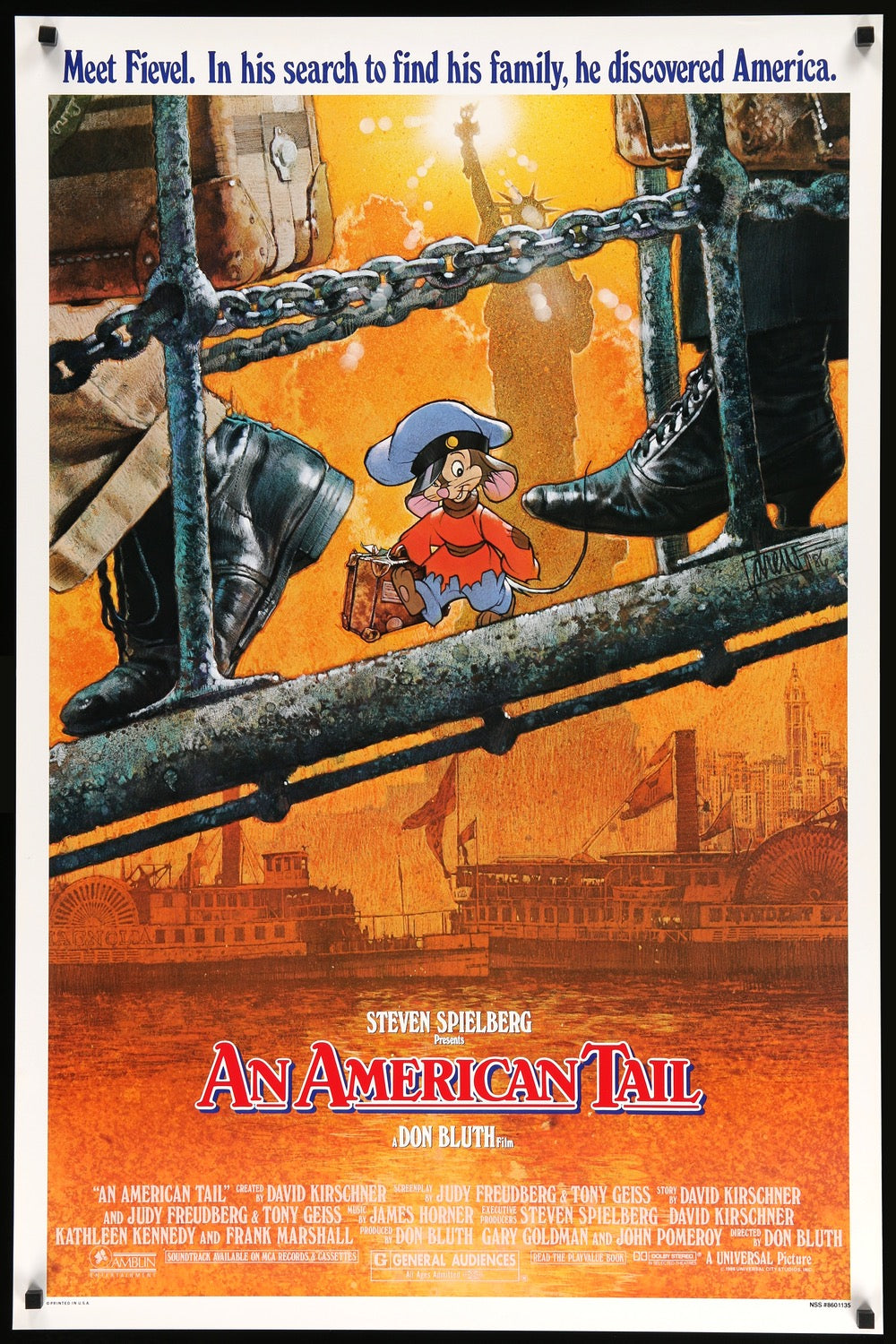
No comments:
Post a Comment